

A development mistake almost never gets paid for during development. It gets paid for three months later, when production is already running, clients are waiting, and there is no way back.
And they are almost always the same seven. They are not mistakes made by people who don't know what they are doing; they happen in workshops with twenty years of experience and brands that already export. They happen because during the development stage everything seems reversible, and by the time it isn't, nobody is looking at those decisions anymore.
None of them happen during knitting. They happen before: in material selection, in the calculations, and in the conversations that were never had with the supplier.
This is the list, with what each one costs and how to avoid it.
This is the most common mistake and the most expensive.
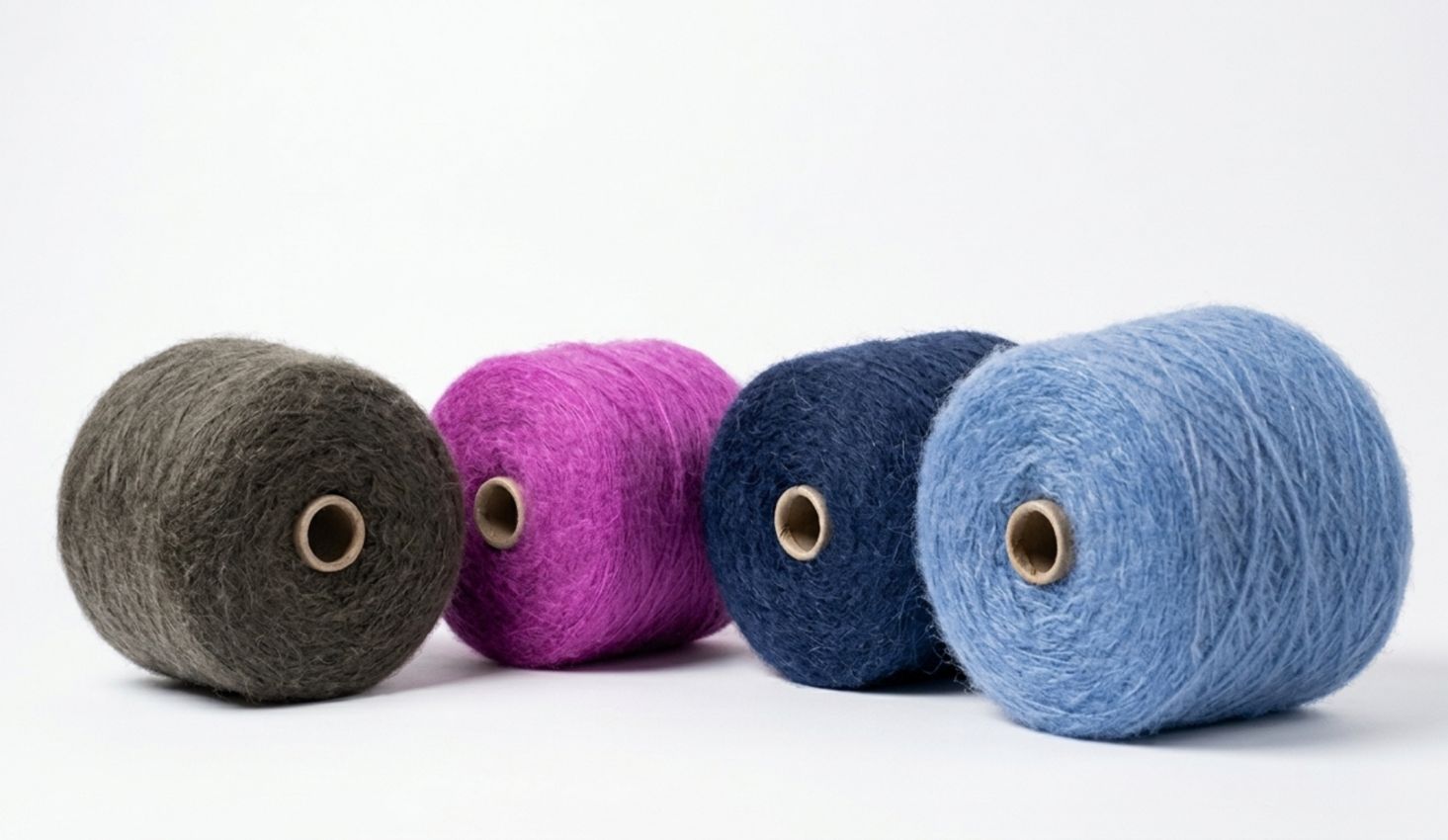
A yarn in your hand is not a yarn in the garment. A cone can feel extraordinary between your fingers and produce a fabric that distorts at the shoulder, drapes differently from the reference, or turns out too warm for the intended use. Your hand on the cone tells you how the fiber feels; only the knitted swatch tells you how it behaves. The behavior of a yarn changes completely depending on the machine gauge, the working tension, the stitch used, and the subsequent finishing process. A yarn that appears voluminous in skein form can produce a flat fabric. One that seems fine can generate more body than expected.
Here is an example that needs no explanation in Peru: the cold of Lima and the cold of Arequipa are not the same cold. Lima has twelve degrees with high humidity, and that humidity cuts through any flat, fine fabric. Arequipa has twelve dry degrees with strong high-altitude radiation; a coat designed for Lima suffocates there at midday and falls short at seven in the evening.
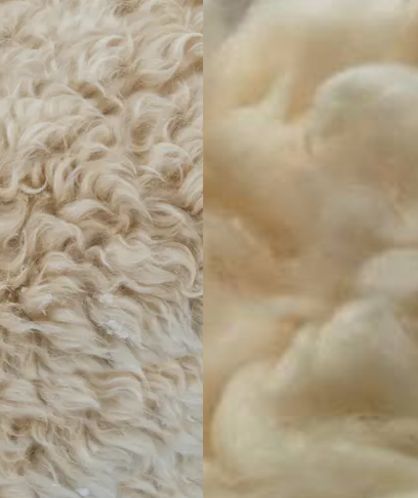
The same yarn, at the same gauge, works in one city and fails in the other. A carded yarn traps air and insulates: it solves the wide thermal range of dry high altitude. A combed, fine, compact yarn performs better where what needs to be managed is constant humidity.
How to avoid it: knit the swatch before deciding, in the actual gauge and stitch of the collection, and evaluate it washed and finished, not raw. Never approve a swatch knitted in whatever gauge the supplier had available. And define first what climate and what use the garment is for: that single answer narrows the catalog by half before you touch a single cone.
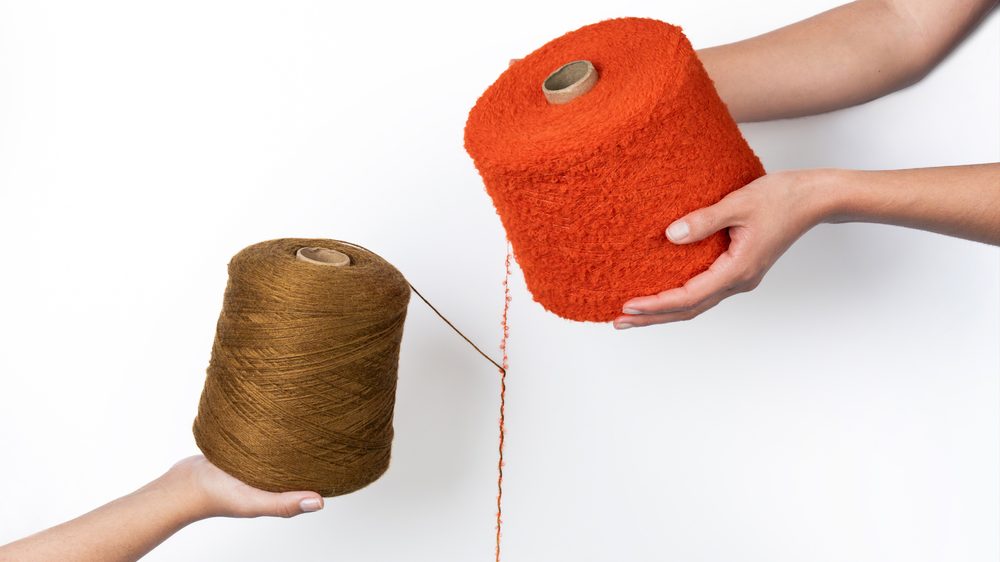
The second mistake has an unmistakable signature: the collection runs out of yarn at twenty percent from the finish line.
It happens because the calculation is done on the perfect garment, knitted by the perfect machine, with not a single second-quality piece. In real production there is machine startup waste, test knits, out-of-measure pieces, yarn breakages, and samples sent to clients that never come back.
That margin is not a luxury, and there is a number that helps put it in perspective. The yarn count tells you how many meters per gram: an Nm 1/9.4 like Suri Air yields around 9,400 meters per kilo, and an Nm 1/15.6 like Nuna Brushed, around 15,600. When the yarn is fine, a small percentage of waste is hundreds of meters that disappear without anyone noticing where.
And the problem does not end at quantity. It ends at the lot: if the shortage appears mid-production, the replenishment may arrive with a tone variation from the original, and the collection closes with two generations of garments that don't match.
How to avoid it: calculate based on the real consumption of your swatch, not the technical sheet, and add a wastage margin plus a replenishment buffer. Measure that margin with your own data: the waste from your last production run with a comparable yarn is the only number that works, because it depends on your machine and your stitch.
And do it before closing the color palette, because after that you are no longer buying yarn, you are negotiating an urgent lot.
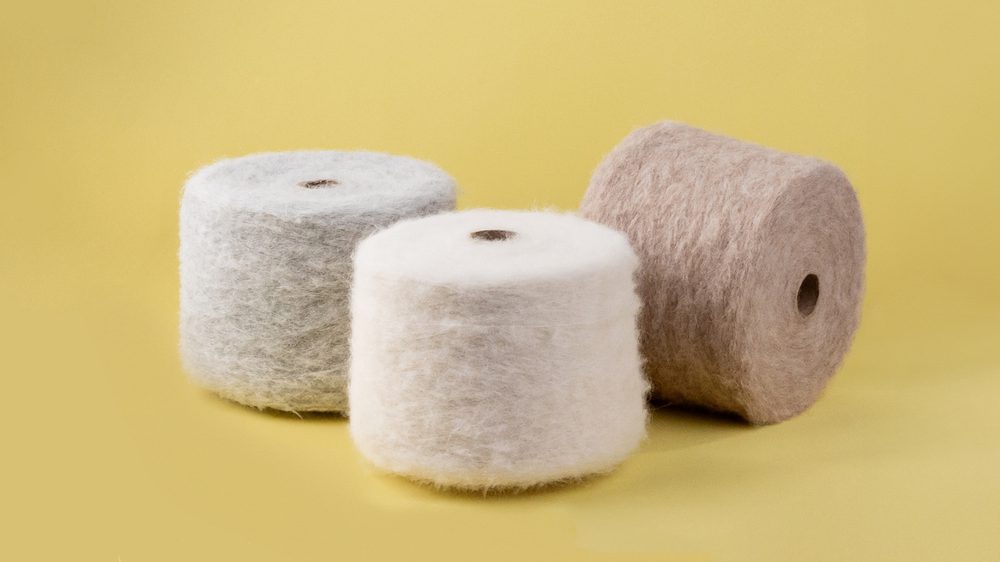
A color approved on a ten-by-ten-centimeter square is not an approved color.
Color reads differently depending on the surface, the stitch structure, and the light. A shade that looked warm on the sample can fall flat on a large panel, and two colors that harmonized on the table can clash on the finished garment. With textured yarns the difference grows: a carded or brushed yarn breaks light and lowers apparent saturation compared to a smooth yarn of the same shade. And with naturally lustrous fibers like alpaca or mohair, any variation is amplified rather than hidden.
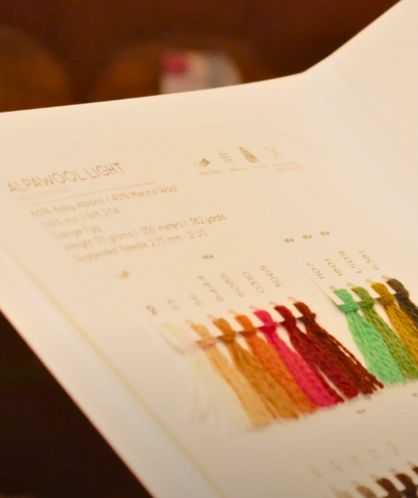
There is also a technical sheet figure that determines whether the color will survive use: fastness. Suri Air, for example, has fastness 4 in dry and 3/4 in wet. Translated into consequence: it holds up well to normal friction, but if the garment combines that shade with a light one and will be used in humid conditions, that gets evaluated before, not after the first complaint.
How to avoid it: approve the color on a panel of the real size and stitch, viewed under both natural light and store light. Request fastness values alongside the technical sheet —dry, wet, and wash— and put in writing with the supplier what tone tolerance is acceptable before production starts. A tolerance agreement that does not exist on paper always gets resolved in favor of the party that already dyed.
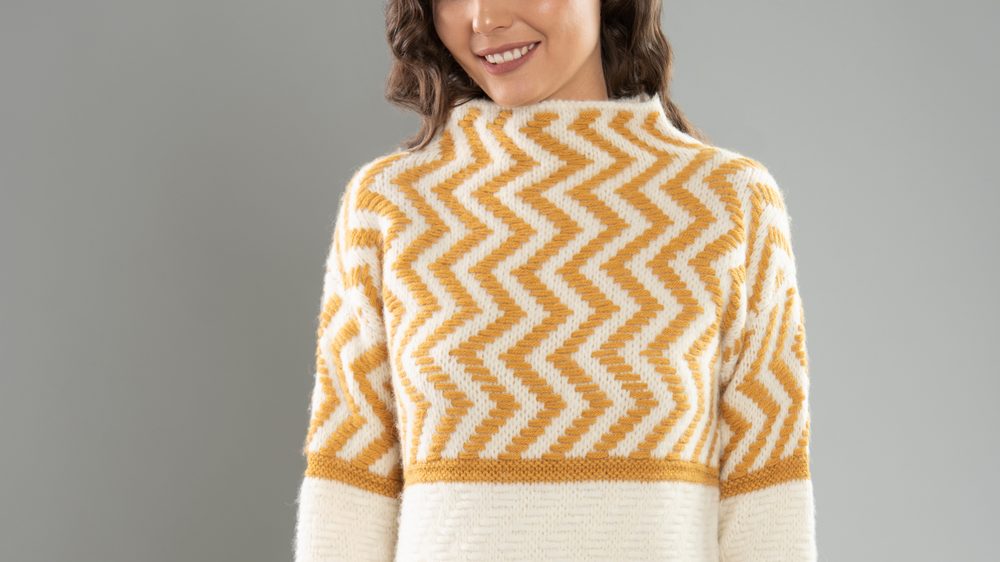
This mistake does not hurt on the first production run. It hurts on the replenishment, which is where the margin lives.
Closing a collection around a color that was a leftover lot means that when your client comes back to order (and if the collection worked, they will come back), that color is gone. Two bad options remain: substitute it with an approximate and explain the difference, or say no.
The conversation exists, it is just had too late. Availability is asked about during production, when it should have been asked about during development. And that is exactly the difference between buying from a permanent stock and buying from a one-off production run. A stock service keeps the color palette available continuously: in Andes Tweed there are 28 colors, in Nuna Brushed 27, in Suri Air 14, and they are there for the second order just as they were for the first.
How to avoid it: before closing the palette, ask for each color whether it is a permanent line or a lot. It is a single question and it determines whether your collection is repeatable or disposable.
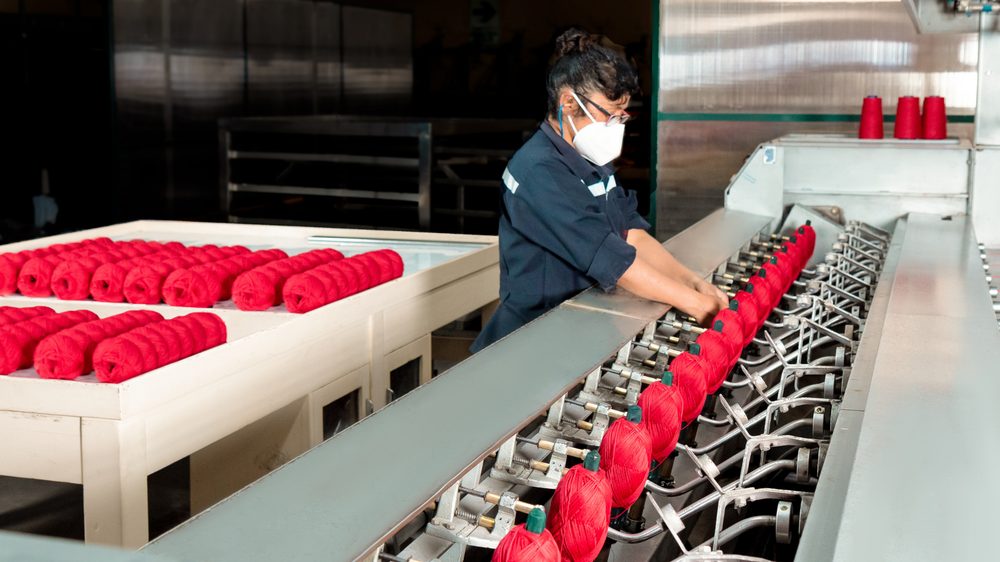
In collection planning, yarn procurement lead times are usually calculated optimistically. It is assumed that the supplier has stock, that shipping will be smooth, and that import processes will run without complications. When any of those variables fails —and in the global textile industry, one always does— production is delayed, launches are postponed, and wholesale buyers lose confidence.
With noble fibers, procurement lead times are especially sensitive. A specific color of alpaca or a particular micron count of mohair cannot be sourced from just any supplier at any time. If the supplier does not have stock, the yarn production time can exceed 8 to 12 weeks, not including shipping time or customs processing.
How to avoid it: build your collection calendar with real procurement lead times as the starting point, not as a variable to figure out later. Always add a minimum of 3 to 4 weeks on top of the delivery time confirmed by the supplier.
Whenever possible, work with suppliers that carry stock at destination or have express shipping capacity from origin. The Inca Tops Stock Service offers scheduled dispatch within 24 hours of order confirmation, from Arequipa, with international coverage.

The gauge of the knitting machine determines the range of yarn counts it can work with optimally. Choosing a yarn that is too fine for a low-gauge machine produces fabrics with insufficient coverage and weak structure. Choosing a yarn that is too thick for a high-gauge machine generates excessive tension, frequent breakages, and an irregular finish that wastes the fiber's potential.
This mistake frequently occurs when the product development and production teams work separately: the designer chooses the yarn for its appearance and feel, and the production team discovers the problem once the yarn has already been purchased and the production schedule leaves no room for changes.
How to avoid it: involve the production team in yarn selection from the very first stage of development. Always verify that the Nm of the chosen yarn is compatible with the gauge available in your workshop or the external workshop you work with. As a general reference: Nm 1/4 works optimally at gauges 5gg to 7gg; Nm 1/9 at gauges 7gg to 10gg; and Nm 1/15 at gauges 10gg to 12gg.
The Inca Tops Stock Service yarns always specify the suggested gauge on their technical sheet to make this decision easier.
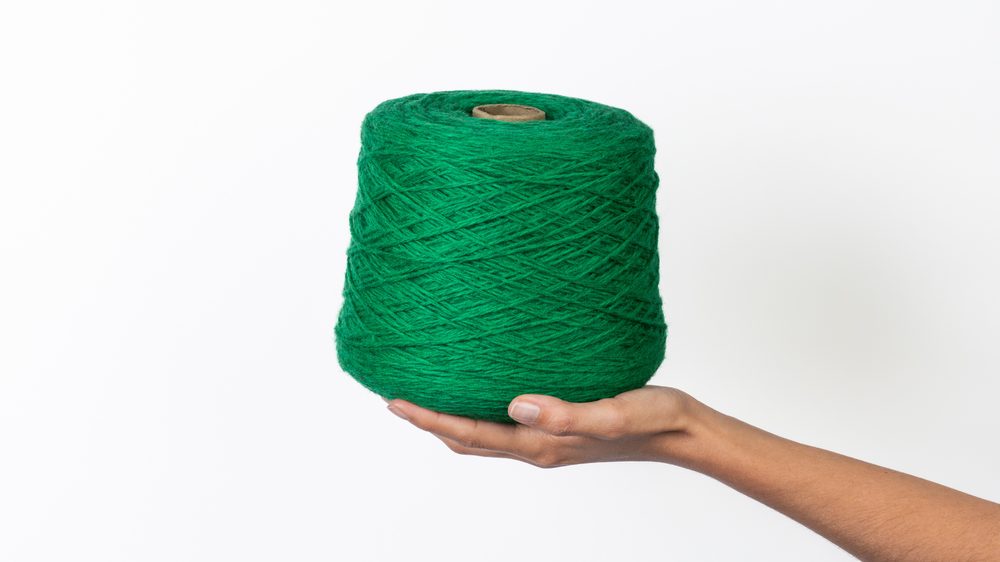
This is the mistake that costs the most and is detected the latest. Mid-development or mid-production, the brand finds a supplier offering what appears to be the same yarn at a lower price. The switch seems like a saving. In practice, it almost always turns out to be a loss.
The new yarn has a slightly different micron count. Or the twist process varies. Or the colors, though similar, do not match the approved ones exactly. The fabric changes, the machine behavior is different, and the approved samples no longer represent the final product. The development team has to start over, timelines extend, and the real cost of the "saving" far exceeds the difference in price per kilo.
How to avoid it: lock in the yarn at the start of development and do not change it. If price is a critical factor, negotiate the volume or order schedule with the original supplier before looking for alternatives. A supplier with permanent stock, certified traceability, and lot-to-lot consistency has a real value that does not appear in the price per kilo but does appear in the collection's final margin.
The composition and process consistency of Inca Tops Stock Service yarns guarantees that the yarn you approve in development is exactly the same one you receive in production, season after season.
How much wastage margin should I factor in when calculating yarn consumption?
At a minimum, 10% on top of the theoretical consumption calculated. In collections with complex stitches, garments with many seams, or finishing processes that include industrial washing, that margin can reach 15% or 20%. It is better to have leftover yarn at the end of the season than to stop production due to shortage.
How do I know if a yarn is compatible with my machine gauge?
Always consult the yarn's technical sheet: the Nm (metric number) indicates the thickness of the yarn and the supplier should specify the suggested gauge. If in doubt, request a sample knitted at your gauge before committing to the order. Inca Tops Stock Service yarns include the suggested gauge on their technical sheet.
Why can a color approved on a sample look different in production?
Color in textiles varies depending on the volume of fiber dyed, the bath ratio, and the finishing conditions. In fibers with natural luster such as alpaca or mohair, that variation is amplified. The solution is to require color approval on a swatch of representative size and establish documented tolerances with the supplier before starting production.
What advantage does working with a permanent stock supplier offer over one that produces to order?
Three concrete advantages: immediate availability that eliminates the risk of running out of stock mid-production; lot-to-lot consistency that guarantees the replenishment yarn is identical to the original; and order flexibility that allows volume adjustments without compromising delivery times. The Inca Tops ESSENTIALS program is built on those three pillars.
Is it advisable to change yarn suppliers between seasons?
It depends on the reason. If the change is driven by a documented quality issue or a strategic evolution of the collection, it may be justified. If the only reason is price, first evaluate the real cost of the switch: new samples, machine adjustments, color approvals, and the risk of inconsistency with previous collections. In most cases, that cost exceeds the apparent saving per kilo.
The most costly mistakes in developing collections with noble fibers do not happen during knitting; they happen before. In yarn selection, consumption planning, color approval, and the conversations that were never had with the supplier at the right time.
Avoiding them does not require a bigger budget. It requires better information, better processes, and the right supplier: one with permanent stock, lot-to-lot consistency, verifiable traceability, and the commitment to support you at every stage of development.