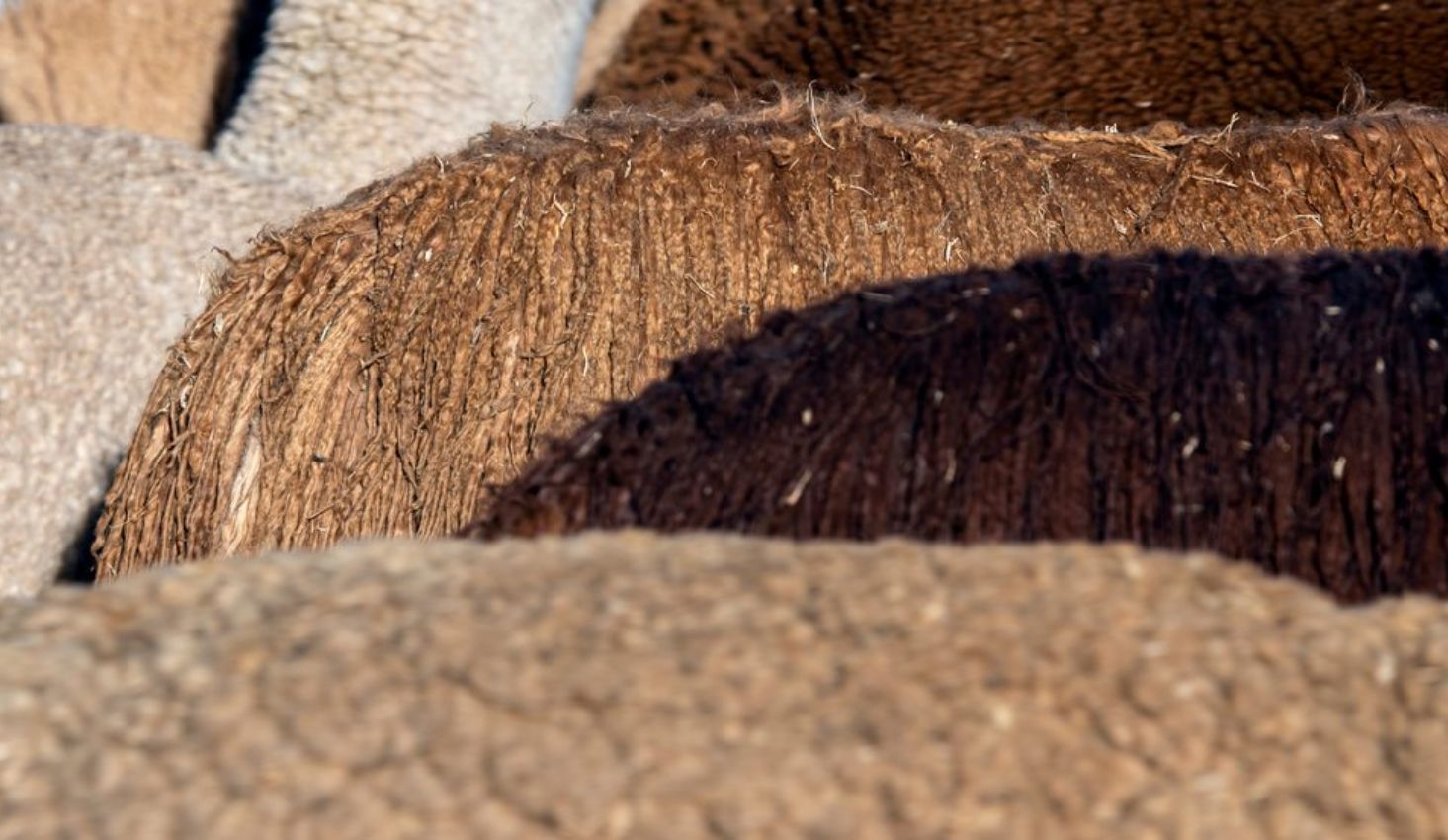


Alpaca is Peru's best-known fiber and also one of the least understood. Almost everything written about it goes in one of two directions: either it is advertising for a finished garment, or it is general-interest writing that stays at the picturesque level.
This article goes another way. It is for anyone who needs to understand the fiber before buying it: what makes it different, how it is graded, and above all which format to buy it in depending on what you are going to produce. Because that last decision is what separates a development that works from one that stalls in the first production run
It is fiber. But almost everyone searches for "alpaca wool", and it is worth understanding why the distinction is not a whim.
Wool, technically, is the fleece of the sheep. What the alpaca produces is a fiber with a different structure, and that difference shows in the finished product. Alpaca contains no lanolin, the natural grease of sheep's wool, it has a natural luster that sheep's wool does not have, and its internal structure makes it more insulating relative to its weight.
In everyday conversation people say wool and nobody gets confused. On a technical sheet, a purchase order or a composition label, you say fiber, or simply alpaca. If you are quoting with a supplier and they say "alpaca wool" without correcting themselves, it is a minor but real signal of how close they are to production.
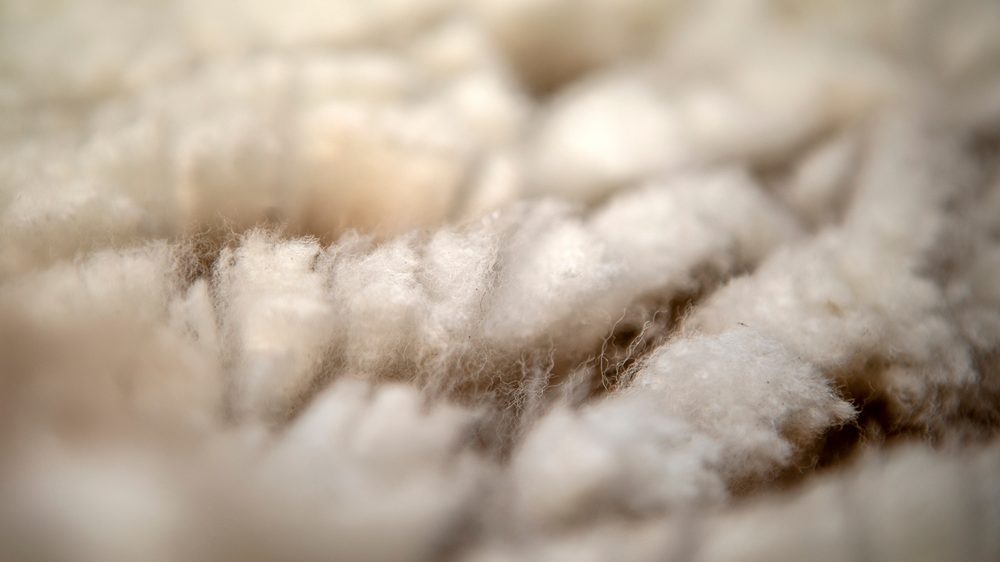
A fiber's properties only matter when they translate into behavior in the garment. Three that do change decisions:
It insulates more per gram. Alpaca gives more warmth with less weight than equivalent sheep's wool. In a winter garment that means you can work a lighter fabric without losing warmth, or keep the weight and gain thermal range.
It has no lanolin. That makes it less irritating in direct contact with the skin and explains why it works in garments worn close to the body, where sheep's wool of the same micron count would itch.
It has its own luster. This is an aesthetic advantage and a production problem at the same time: luster amplifies any tone variation between lots. A color that would go unnoticed in conventional wool is visible to the naked eye in alpaca under natural light.
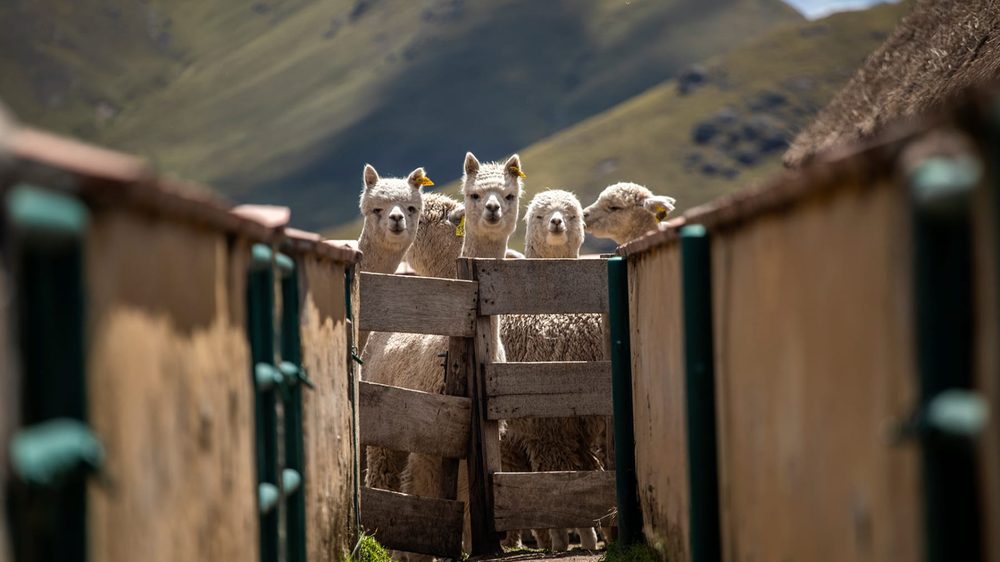
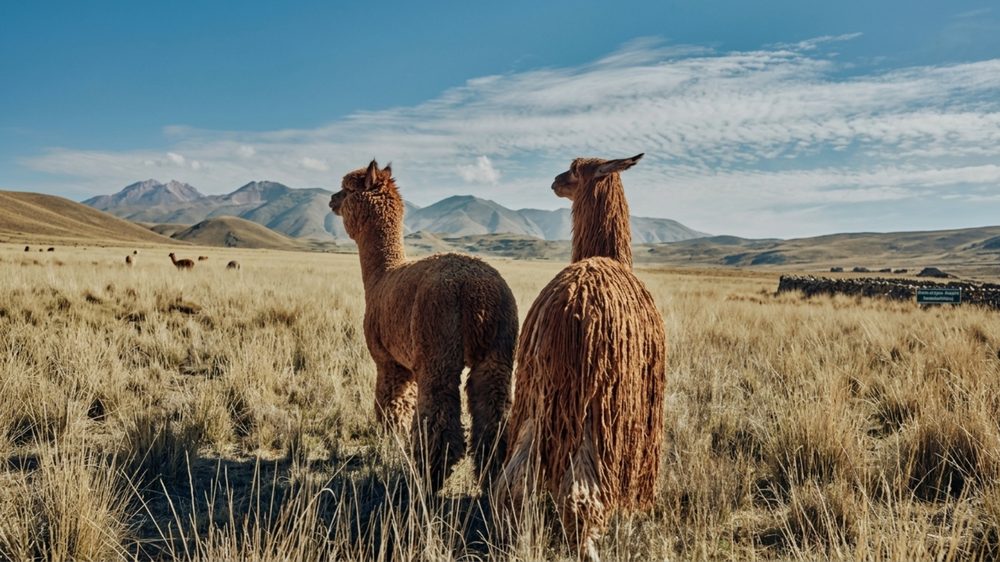
The bulk of the Peruvian alpaca herd lives in the high Andean communities of the altiplano — Huancayo, Puno, Cusco, Huancavelica — and the processing (scouring, grading, combing, spinning, dyeing) takes place in Arequipa. Between the shorn fleece and the finished cone there is transport, a grading by fineness, and several industrial processes that have nothing to do with husbandry.
That journey is the reason traceability matters. When a buyer asks for certified origin, they are not asking about the country: they are asking whether anyone can reconstruct which community that fiber came from and under what conditions the animal was raised. It is a chain with many hands, and without a traceability system it becomes impossible to answer.
The Pacomarca Experimental Ranch, located in the Peruvian altiplano at over 4,200 meters above sea level, is the most advanced alpaca genetic research center in Peru and the traceable point of origin of the fiber Inca Tops processes in Arequipa.
At Pacomarca alpacas are not only bred: they are researched, selected and improved. The center works on the genetic improvement of the herd with the aim of producing animals with finer diameter fibers, greater uniformity and better lot-to-lot quality. Each animal has an individual record that makes it possible to trace its genealogy, its rearing conditions and the quality of its fleece over time.
Buying alpaca is not the same as knowing which breed it comes from, because the resulting yarn changes.
Huacaya accounts for almost 90% of today's herds. Its fiber grows perpendicular to the body and has natural crimp, which gives it density, volume and the ability to trap air. It is the one that produces fabrics with body, with that spongy hand associated with alpaca.
Suri is the minority breed. Its fiber grows parallel to the body, in long locks that hang like fringe, with no crimp. It gives less volume and more luster, with a silky, fluid drape. It is what you look for when the design calls for drape instead of structure.
That 90% to 10% ratio explains why a suri yarn costs what it costs, and why Baby Suri accounts for barely 0.5% of all fiber production.
In practice that translates into concrete yarn decisions. Our Suri Air (78% suri alpaca, 22% recycled polyamide) takes advantage of that silky drape; a carded yarn like Pukyu Woolen Spun, 100% baby huacaya alpaca, gives the opposite: body, volume and a matte surface. Neither is better; they are answers to different questions.
This is the part where there is the most confusion, and where getting it wrong is most expensive.
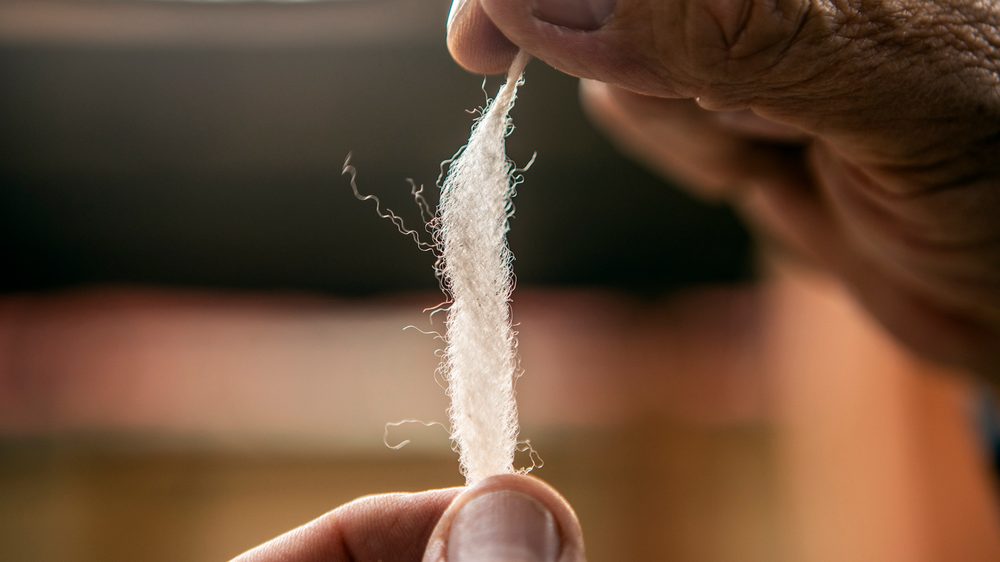
Fiber is graded by micron count (the average diameter of the hair, measured in microns) and from that come the commercial denominations that appear on technical sheets. The finer it is, the softer to the touch, the scarcer and the more expensive.
| Denomination | Micron count | % of total production |
| Alpaca 16 | 16 microns | Exclusive selection |
| Royal Alpaca | 18–19.5 microns | 2% |
| Baby Alpaca | 21.5–23.5 microns | 25% |
| Baby Suri Alpaca | 22–23 microns | 0.5% |
| Alpaca Superfine | 25.5–26.5 microns | 40% |
The price of alpaca is directly related to its fineness: the lower the micron count, the higher the value. But scarcity also plays a part. Royal Alpaca, one of the finest categories, accounts for barely 2% of total production, while Baby Suri reaches only 0.5%. These are not marketing categories but a reflection of a productive reality: few alpacas produce fibers that fine. By contrast, the Superfine category concentrates close to 40% of production and is the one that sustains the largest volume in the market.
Now, the two warnings almost nobody gives:
Baby alpaca does not mean baby animal. It is a fineness grade, not the age of the animal. The proof is in the table itself: Baby Alpaca and Baby Suri Alpaca share practically the same micron range and come from two different breeds. If "baby" referred to age, there would be no way for two different varieties to land on the same number. An adult animal can produce fiber that qualifies as baby if its diameter falls within the range.
The denomination without the number means nothing. "Baby alpaca" on a label, with no micron count beside it, is a commercial promise. With the micron count declared it is a verifiable data point, and it is what you have to ask for when the garment is going to be exported or the end client demands specification.
A detail that is often overlooked: Baby Alpaca exists in 22 natural colors. For a collection that wants to avoid dyeing — for cost, for time or as a sustainability argument — that natural palette is a considerably broader starting point than most people assume.
This is where most articles stop and where the useful part begins. Fiber is traded in three states and each one serves a different type of buyer.
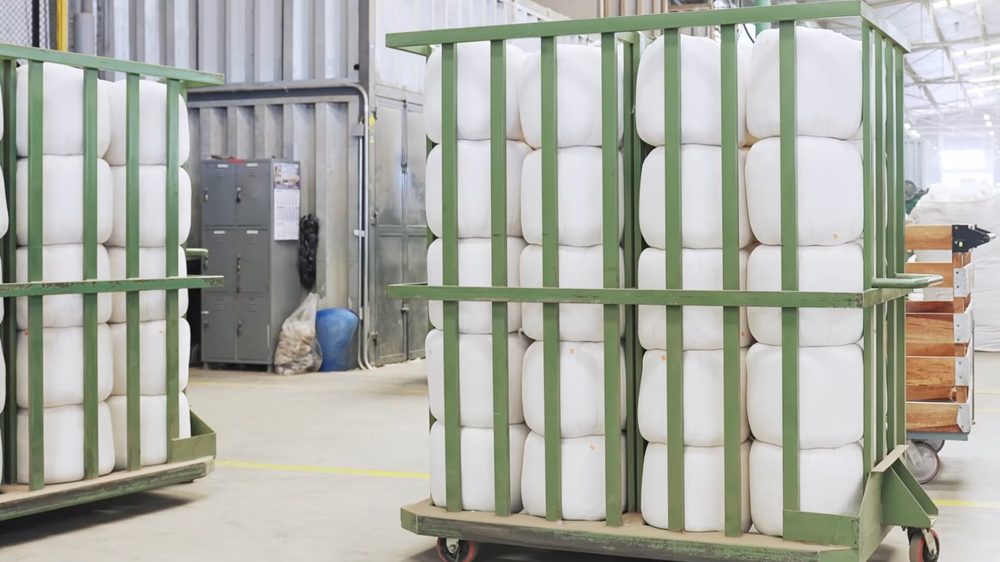
Fleece. The fiber exactly as it comes off the shearing, unprocessed. It is bought by plants with their own scouring, carding and spinning capacity. If you do not have that infrastructure, it is not an option.
Tops. The fiber already scoured, combed and aligned into a continuous sliver, ready to spin. It is the input of spinning mills. It is also the state in which it is dyed when maximum color uniformity along the yarn is the goal.
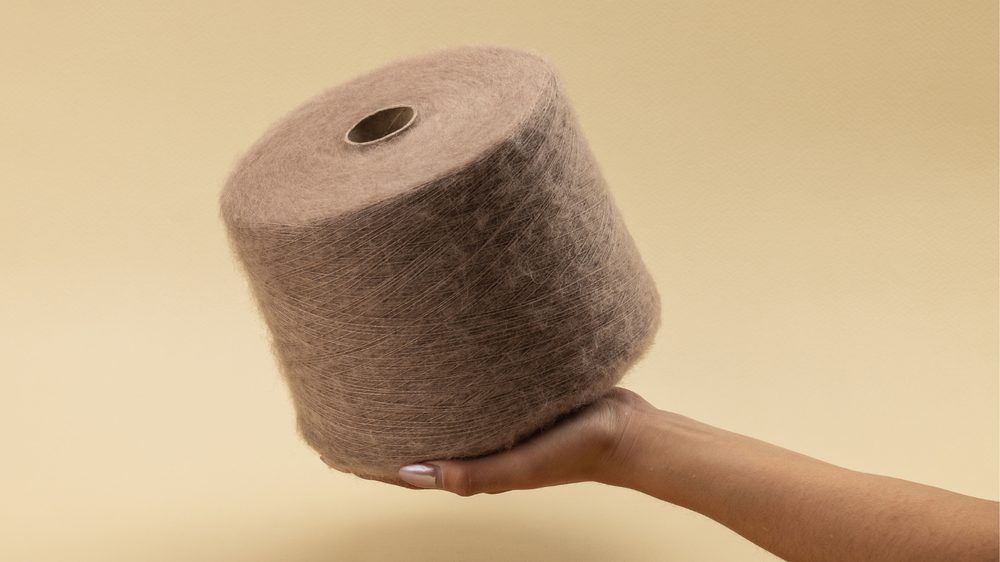
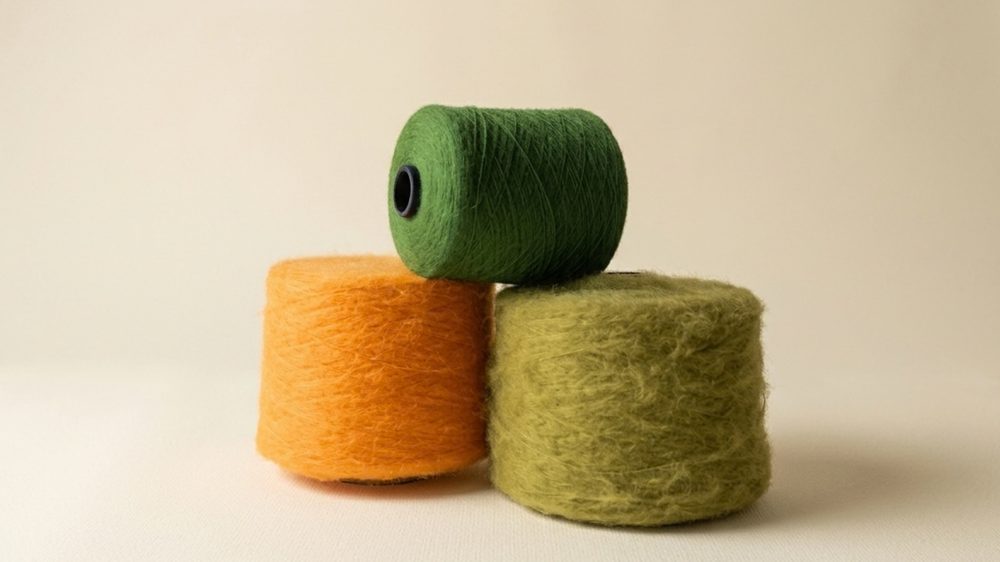
Yarn. The fiber already turned into yarn, with its count, its twist and its color defined. It is what knitters buy: workshops, brands, designers, garment plants. It is sold on cones for machine knitting or in skeins and balls for hand knitting.
The practical question is simple: if you are going to knit, you buy yarn. And there the next decision is cone or skein, which is not a matter of quantity but of machine. The cone is designed to feed a knitting machine continuously; the skein and the ball, for hand knitting.
If you produce on a machine and you are buying balls because the supplier does not sell to you any other way, you are overpaying for a presentation you are going to undo.
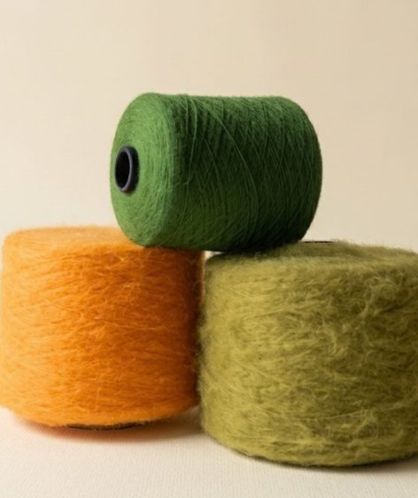
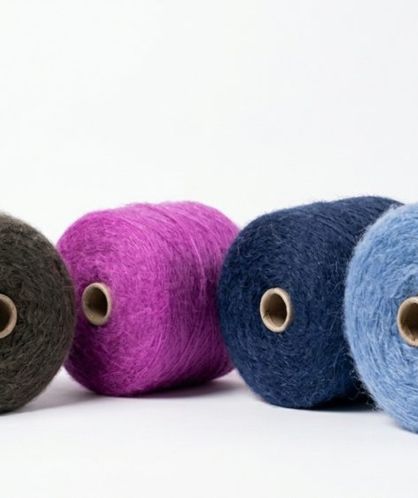
Cones. Ideal for machine knitting processes, since they feed the knitting machine continuously. They are the usual option for workshops, garment plants and manufacturers working at production volumes.
Skeins. A yarn presentation that is especially useful for hand knitting and for those who enjoy working with premium fibers. Before using them it is generally necessary to wind them into balls to make knitting easier.
Balls. Practical for hand knitting, since they let you start working with the yarn directly without having to prepare a skein first.
The choice depends on how you are going to work the material. Amano Yarns brings premium fibers to knitters, designers and makers who turn them into unique pieces, with presentations such as skeins and balls.
Grading by micron count does not stay in theory: it appears declared in the composition of every yarn. This is how it looks on our own range:
| Yarn | Composition | Alpaca quality |
| Pukyu Woolen Spun | 100% Baby Alpaca | Baby · 22–23 microns |
| Anta 2/16 | 100% Superfine Alpaca | Superfine · 26–27 microns |
| Wayra 2/60 | 70% Baby Alpaca · 30% mulberry silk | Baby · 22–23 microns |
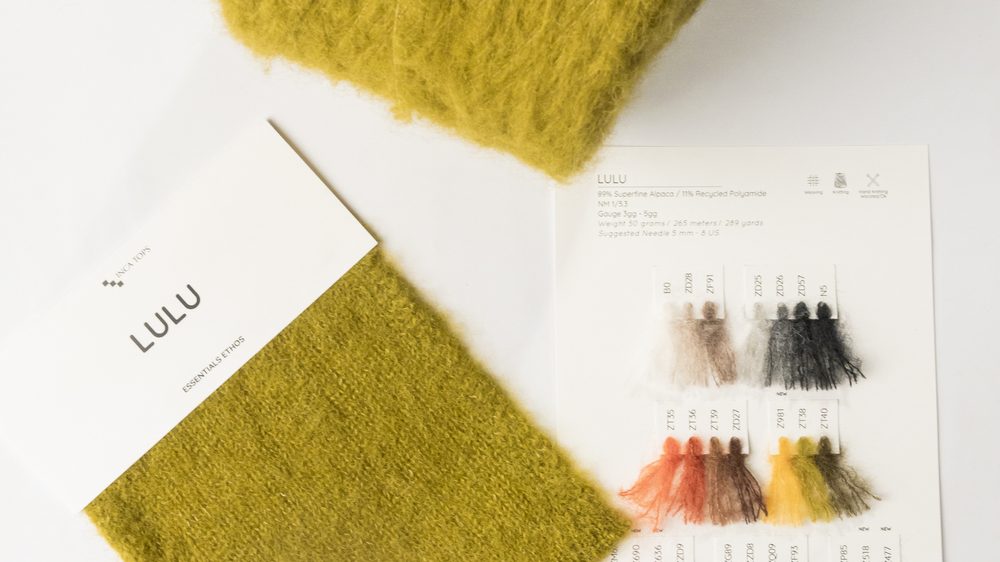
| Alpaloop 5 | 89% Superfine Alpaca · 11% recycled polyamide | Superfine · 26–27 microns |
| Trilogy | 54% Baby Alpaca · 22% Super Kid Mohair · 24% mulberry silk | Baby · 22–23 microns |
| Suri Air | 78% Suri Alpaca · 22% recycled polyamide | Suri |
Two useful readings of this table:
The denomination travels with the yarn. When a technical sheet says "Baby Alpaca", you already know we are talking about 22 to 23 microns. If it says "Superfine", 26 to 27. That is the difference between a declared composition and a vague label: you can turn it into a number before buying.
The blend changes the garment's destination. Pukyu is pure carded baby alpaca; Wayra is the same fiber quality but with 30% silk, which completely changes its drape; Trilogy adds super kid mohair to that base. Three yarns with baby alpaca of 22 to 23 microns and three fabrics that look nothing alike.
And blends are not always about luxury: Suri Air carries 22% recycled polyamide to give structure to a fiber that does not have it on its own, and Alpaloop 5 carries 11% for the same reason. Pure fiber is not automatically the best answer: it depends on whether the fabric needs drape, strength, volume or luster.
Beyond the micron count, the technical sheet carries two other data points that decide whether the yarn works for what you want to make:
The count (Nm), which indicates how many meters there are per gram — that is, how fine the yarn is and how far it goes per kilo. Andes Tweed Woolen Spun exists in 1/4 and in 1/8: identical composition, two yields and two different destinations.
The suggested gauge, which is the machine range in which that yarn runs well. It cannot be deduced from thickness: the yarn's volume, twist and finish weigh as much as the count. That is why gauge is read on the technical sheet of the yarn you are going to use and not estimated by analogy with another. If you want the field-by-field detail, we cover it in how to read a yarn technical sheet.
And color fastness, which tells you how well the shade holds up to friction and washing. If you are going to combine a dark shade with a light one in the same garment, that gets evaluated before producing and not after the first complaint: it is one of the 7 most common mistakes when developing a collection with noble fibers.
If the garment is going to be exported or sold to a brand with traceability requirements, certification stops being an ornament and becomes a purchase order requirement.
The ones that apply to alpaca fiber and to the processes it goes through are OEKO-TEX Standard 100 and STeP, GOTS, RAS, RWS, RMS and NATIVA. Each one covers something different — absence of harmful substances, production conditions, animal welfare, origin traceability — and none covers everything.
What matters when buying: ask them to specify which certification applies to that specific yarn, not to the supplier in general. They are different things and the difference shows up when the end client asks for the document.
Is alpaca wool?
Technically no. Wool is the fleece of the sheep; the alpaca produces a fiber with a different structure, without lanolin and with its own natural luster. In everyday speech people say "alpaca wool" and it is understood, but on technical sheets, compositions and purchase orders you say alpaca fiber, or alpaca.
Is baby alpaca from a baby alpaca?
No. It is a fineness grade: Baby Alpaca corresponds to fiber of 22 to 23 microns, regardless of the animal's age. The proof is that Baby Suri Alpaca shares the same micron range while coming from a different breed. An adult animal can produce fiber that qualifies as baby if its diameter falls within the range.
What is the finest alpaca fiber?
Royal Alpaca, at 18 to 19 microns, is the finest the huacaya gives, and it accounts for only 2% of total production. Above that is Alpaca 16, an exclusive selection of 16 microns that constitutes a world record in fiber. Among camelids, only the vicuña surpasses alpaca in fineness.
What is the difference between huacaya and suri?
Huacaya has natural crimp and gives volume and body to the fabric. Suri has no crimp: it falls in smooth locks, with more luster and a more fluid drape. The choice depends on whether the design needs structure or drape.
Is it better to buy on cones or in skeins?
It depends on the machine, not the quantity. The cone is designed to feed a knitting machine continuously; the skein and the ball, for hand knitting. If you produce on a machine and buy balls, you are paying for a presentation you are going to undo.
Why does the same color look different between alpaca lots?
Because the fiber's natural luster amplifies any tone variation. A difference that would go unnoticed in conventional wool is visible to the naked eye in alpaca under natural light. That is why it is best to approve color on a knitted piece of representative size and not on a small swatch.
Which certification should I ask for?
The one your end client requires. Always ask them to confirm which certification applies to the specific yarn you are buying and not to the supplier in general: they are different things and the difference shows up when the document has to be presented.
Understanding alpaca fiber is, in practice, understanding three decisions: which breed it comes from, at what fineness, and in which format you are going to receive it. All three are made before producing and all three are expensive to correct afterwards.
If you are going to knit, the answer to the third is yarn. And if you knit on a machine, it is yarn on cones with its count, its gauge and its fastness specified on the technical sheet.
In the Essentials Stock Service the minimum order is 1 kg per cone, with a permanent color palette and the full technical sheet for every yarn. Enough to knit your real swatch and test it on your machine before committing to a production run.
Select which categories of cookies you want to allow. Strictly necessary cookies cannot be disabled because they are essential for the site to work. You can change your decision at any time from the "Cookie settings" link in the footer.
They enable navigation, keep your session, the selected language, form security and remember your cookie preferences. The site does not work properly without them.
| Name | Provider | Duration |
|---|---|---|
| inca_tops_session | incatops.com | Session (max. 120 minutes) |
| XSRF-TOKEN | incatops.com | Session (max. 120 minutes) |
| incatops_cookie_consent | incatops.com | 180 days |
They let us measure how many people visit the site and how they use it (page views, visit time, traffic source) in order to improve it. They are provided by Google Analytics 4 and are only enabled if you accept them.
| Name | Provider | Duration |
|---|---|---|
| _ga | Google LLC (Google Analytics) | 2 years |
| _ga_83BRY52FMD | Google LLC (Google Analytics) | 2 years |
They are used to show personalized advertising and measure campaigns. This site does not currently install cookies in this category; if they are added in the future, they will only be enabled with your consent.