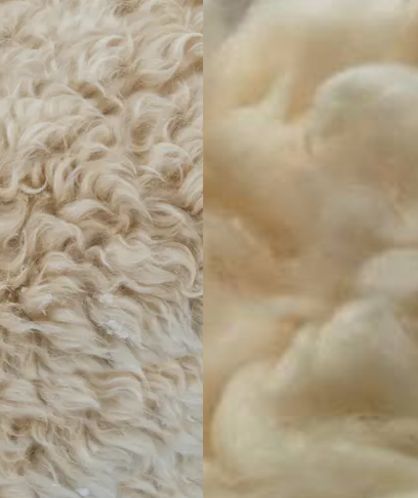


In the textile world, every choice of raw material tells a story. Raw yarns aren’t just a technical alternative, they represent a commitment to authenticity, versatility, and sustainability.
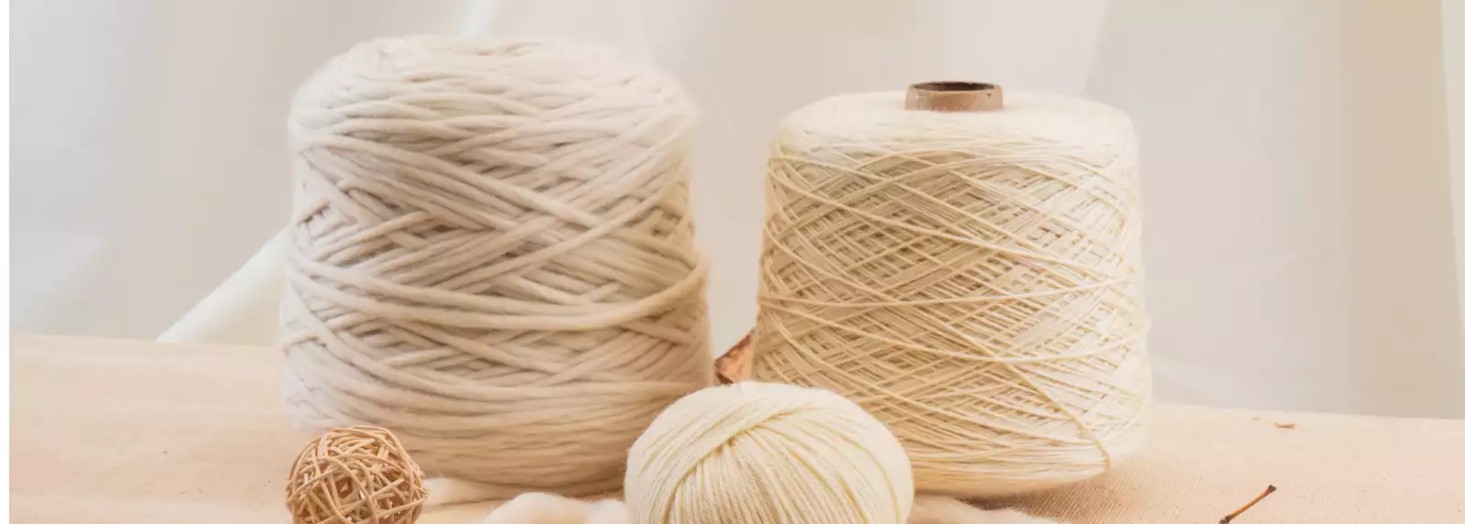
At ESSENTIAL STOCK SERVICE, we embody this philosophy in our FAST TRACK line, offering natural fiber cones from 1 kg, including baby alpaca, merino wool, and royal alpaca, all in their purest form.
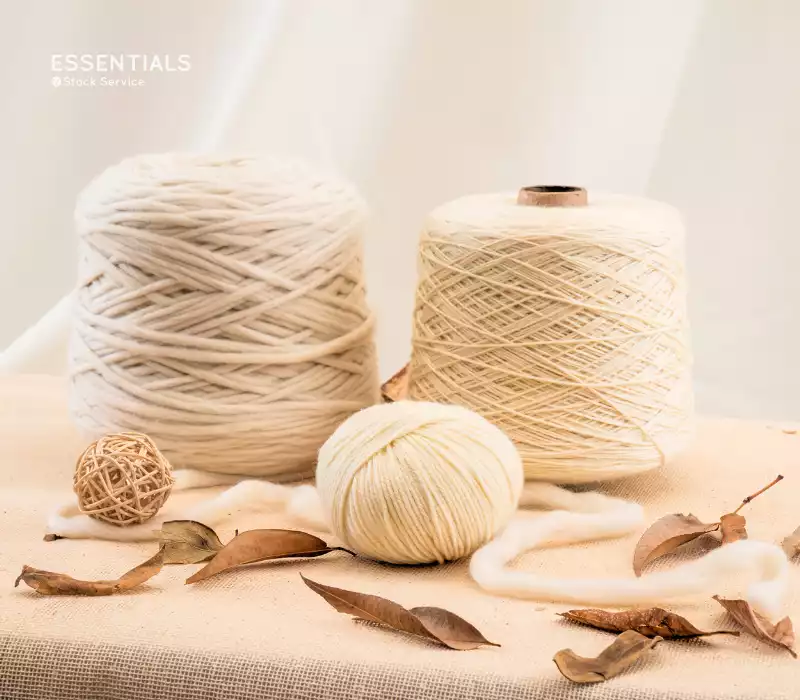
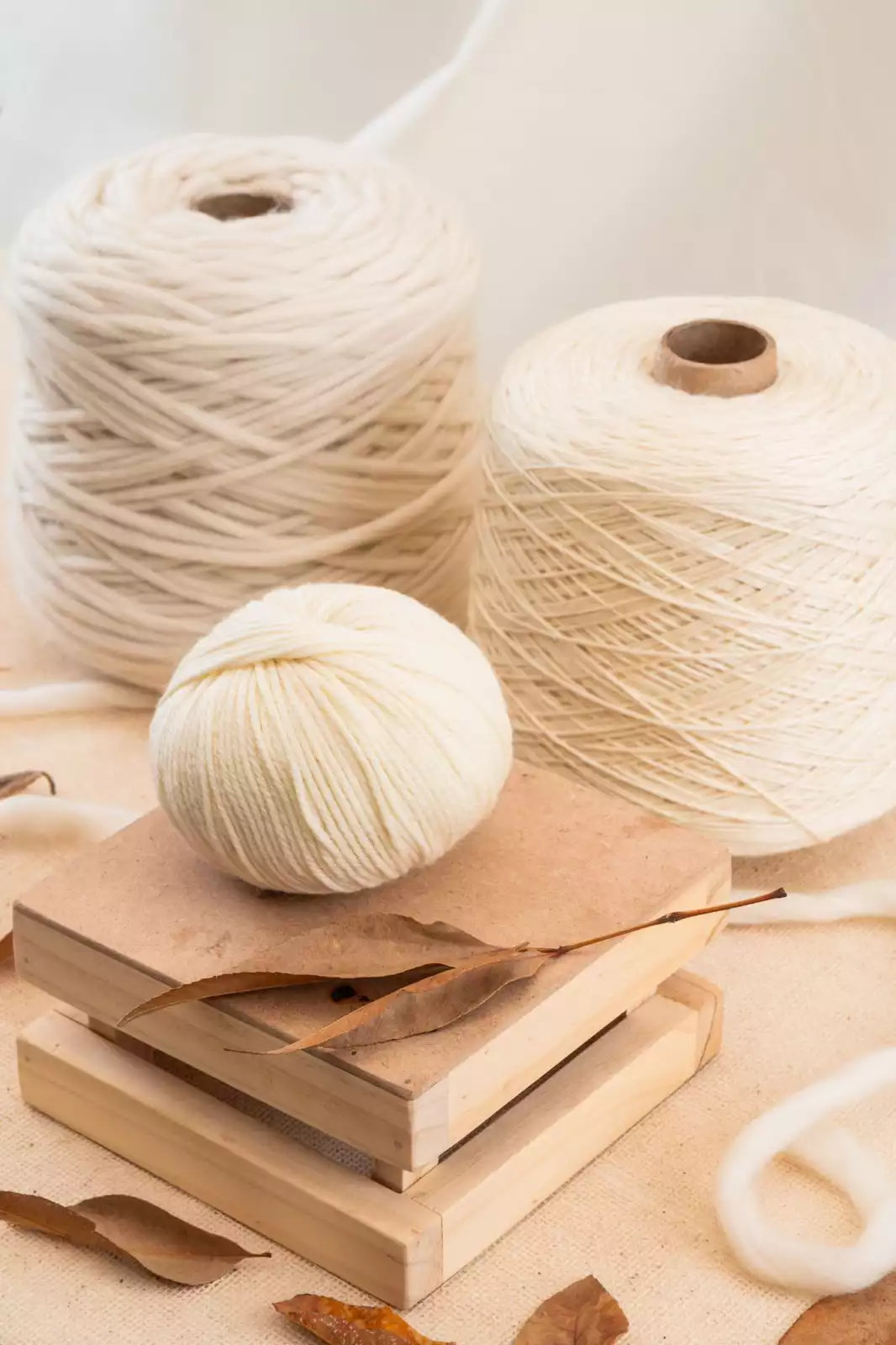
Raw yarn is yarn that hasn’t been dyed, printed, or chemically treated to alter its natural color. Typically appearing in shades of white or cream depending on the fiber, it preserves the original qualities of the material. For fibers like alpaca or merino wool, this means their softness, durability, and thermal properties remain untouched.
According to the European Official Journal, raw yarn is defined as yarn that hasn’t been bleached or dyed, allowing for greater customization and reduced chemical intervention.
FAST TRACK is a nimble solution for those who need immediate access to raw yarns. Designed for brands that value speed without compromising quality, this offering features cones starting at 1 kg, ready to be transformed as needed. Whether you’re dyeing, knitting, or experimenting, FAST TRACK provides creative freedom, no delays, no minimums.
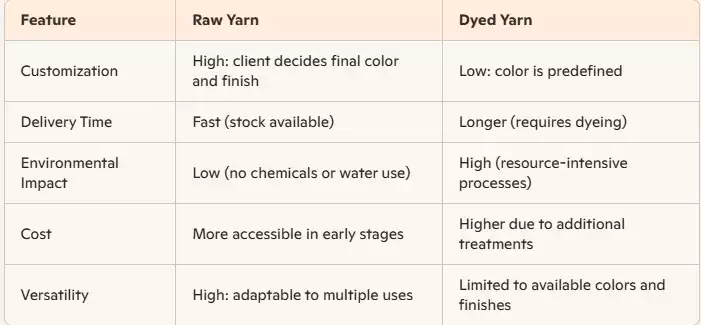
Raw yarn offers unmatched flexibility. By skipping the dyeing process, it helps reduce water and energy consumption, making it a more responsible option.
Quality starts at the source. Keeping fibers in their natural state preserves essential attributes like fiber length, strength, and softness. According to Testex, raw yarn maintains more consistent quality when made from short, uniform fibers without chemical alterations.
In the case of royal alpaca, known for its finesse under 23 microns, this natural preservation results in high-performance yarns ideal for luxury knits.
The textile industry accounts for roughly 10% of global CO₂ emissions. Much of this impact comes from dyeing, which uses vast amounts of water, energy, and chemicals. Choosing raw yarn significantly reduces this environmental footprint.
Natural raw fibers also support circular economies. Ethical alpaca farming practices and traceability reinforce this sustainable approach.
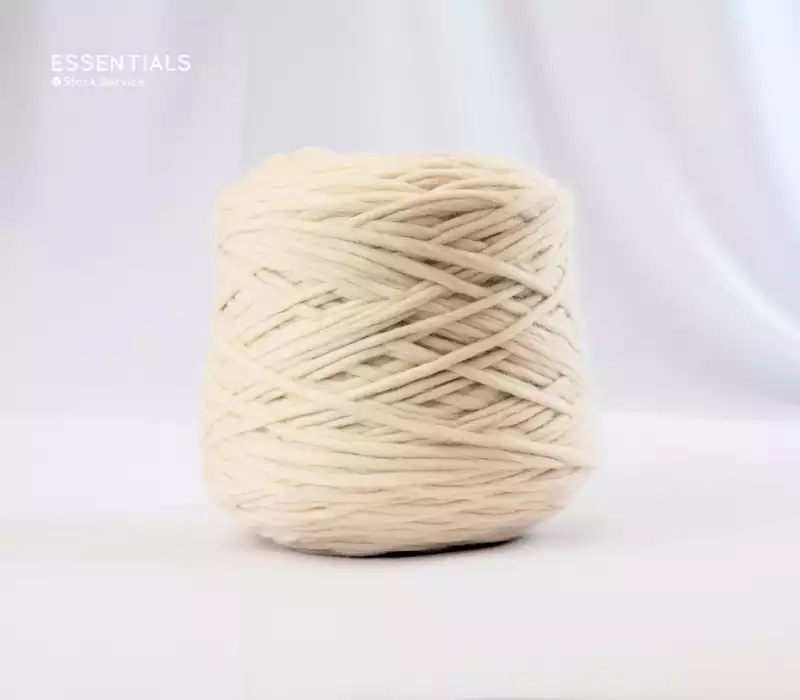
Choosing raw yarns means choosing creative freedom, sustainability, and lasting quality. It’s a smart move for brands that value authenticity and seek differentiation in a saturated market. Through FAST TRACK, ESSENTIAL STOCK SERVICE offers premium natural fibers, ready to be transformed into meaningful textile stories.